
Why spatial intelligence will power the robotics revolution
Why we invested in Staer

When hearing the word “robot” twenty years ago, people might have thought of a humanoid serving coffee or of R2-D2 from Star Wars. In recent years, robots have made their way out of sci-fi movies into our everyday lives.
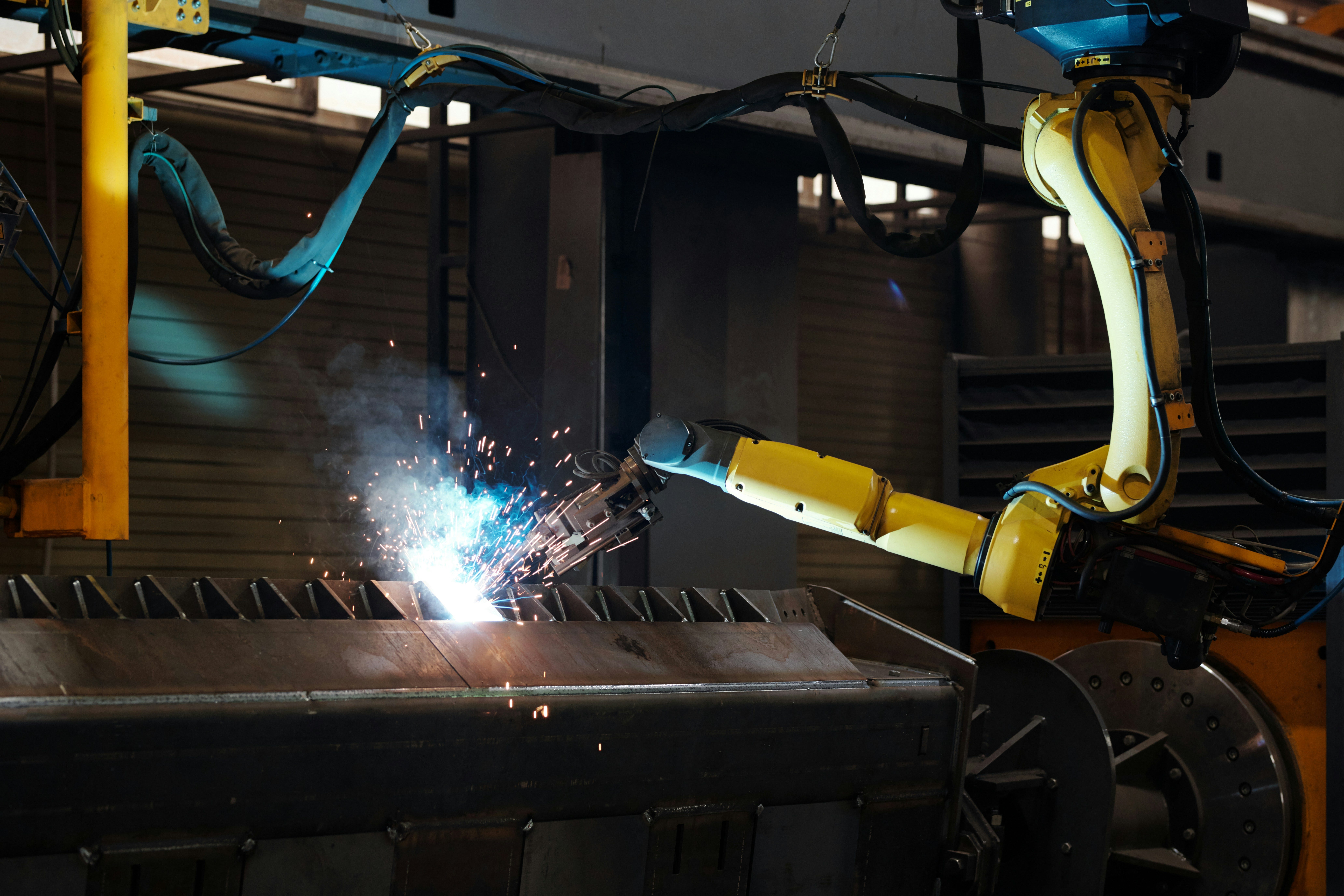
Around 37 million robots are already out in the world. Some are obvious, like the ones vacuuming the living room. Many are invisible to us, assembling cars, moving goods, welding parts, or doing work that sits behind the products we use every day. The humanoid assistants might still be in their early days, but the idea that robots will take on more physical work around us is no longer a fantasy.
An inevitable shift
A major shift in how we organize work is happening right now: The current advancements in AI and hardware are the start of a new wave of automation in physical work far beyond what we’ve seen before. It might sound a bit far-fetched, but these developments point to a future where any type of physical work will either be assisted by robots or performed by them entirely.
The same way that it’s normal to have technology help us park our car or a machine autonomously mow our lawn, robot coworkers will start showing up in more and more industries, taking on the tasks they’re better set up to do than us humans. The industrial robotics market alone is already worth tens of billions and expected to nearly double by the end of the decade.
The challenge waiting to be solved is how exactly these new robotic coworkers will collaborate with us – and vice versa.
Why robots need spatial intelligence
One group of robots is particularly important for this development, especially after making huge technological leaps in the past couple of years. We’re talking about mobile robots, the ones that move around with wheels or legs. Unlike stationary robots that can only solve simple repetitive tasks right in front of them, mobile robots move more flexibly and adapt to what’s around them. Think about a robot in a hospital delivering samples to a lab: it needs to know how to navigate there, notice what’s happening in the hospital halls along the path, and understand where it can move without bumping into anything. This spatial intelligence is exactly what’s still missing in a lot of cases. If mobile robots don’t know what’s going on around them at all times, we can’t really let them get to work in more complex environments.

Jan Erik noticed this obstacle in the robotic revolution. At Mapillary and later Meta, he and his co-founders had built spatial understanding technologies for VR headsets and mapping applications. They saw robotics as one of the major shifts that will transform society in the next decade, and held the tech stack that could unlock the next chapter.
Together, Jan Erik, Carl, Johan, Peter, Yubin, and Pau got together to found Staer. Using cameras and AI-based perception, Staer helps mobile robots succeed in their new careers by providing the spatial intelligence foundation they need to deploy and coordinate smoothly.
How to make a robot the perfect warehouse coworker
While creating real-life R2D2’s might arguably be the coolest application for this tech, the team got hooked on developing robots’ spatial intelligence for a sector that urgently needs it: warehouses and logistics. These are often highly physical industries, where companies are experiencing growing labor shortages. As the amount of work grows faster than the population, this problem is only bound to get bigger and bigger. On top of that, e-commerce operators face pressure from customers demanding faster deliveries and lower prices, squeezing their operations from all sides. Automation adoption is becoming inevitable and mobile robots are the perfect way to bring it to the warehouse floors.
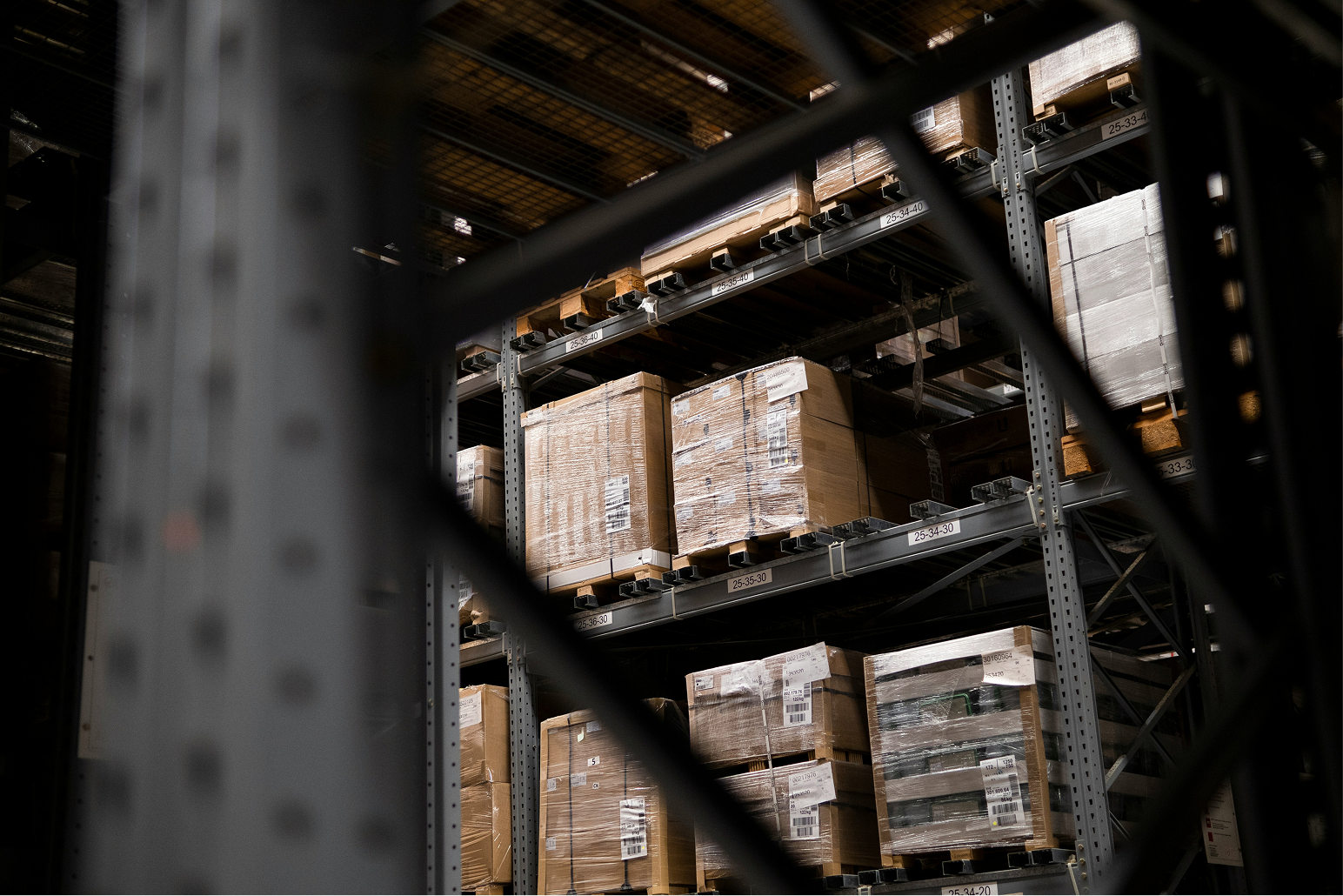
To make mobile robots become successful warehouse workers, they need to be able to do two things: understand their environment and coordinate around it. Staer enables both. The spatial intelligence layer feeds the robot with information about what is happening around them. In a warehouse setting this could mean where objects are, how many parts are still on a shelf, or what other machines or humans are roaming around. The coordination layer works together with the robot’s own software to put this information to use, so that robots can plan routes, avoid each other, and divide tasks across the floor.
A problem that a lot of operators run into is that each robot manufacturer provides their own technology stack. If a warehouse has robots from two different manufacturers, coordinating between them is nearly impossible. Staer changes that with a solution that is agnostic to both the type of sensors robots have and the type of robot itself. It allows any of the warehouse’s favorite robotic coworkers to work together without any communication problems.
Beyond the warehouse floor
In addition to this coordination, Staer runs a cloud service that takes the sensor data to create maps and to maintain a registry of where everything is in the environment. Instead of mapping the workplace just once, Staer takes in this information continuously throughout the day, every time robots pass through the shelves. In big and complex warehouses, where stocks, inventory and layouts can change all the time, having this information constantly up-to-date makes all the difference for keeping operations running without downtime.
For site owners and warehouse operators running a robot workforce, this combination of environmental understanding, coordination and data visibility brings a new level of workplace productivity as a subscription. Like any other utility, it runs in the background and keeps operations running as they should. Warehouses are just the starting point: In the long-term, Staer plans to step off the warehouse floor and into other industries where mobile robots will have an impact. Coordinated mobile robots could be delivering samples in hospitals, they could harvest our fruit, or move things around in a construction site.
When we imagine what the future with robots will look like, there are still a lot of question marks in our heads: Will robot taxis become the norm in our cities? Will humanoids cook us our food? Will they handle critical medical operations? What tasks will humans keep on doing and which ones will robots take over? Besides a lot of open-ended roads, one path is clear: There is a major transition happening in physical work today and robots will inevitably be a part of it. We are incredibly excited to support Staer in driving this development forward and can’t wait to see the positive impact that they’ll have on our society.